
Some places have a special place in a person’s heart. Bimber, for me, is one of those places. The very first whisky distillery I set foot in wasn’t nestled amongst babbling brooks or in the shadow of Scottish mountains – instead it was here, amongst the car repairers and chinese snack importers on a West London industrial estate.
Today I returned to this mecca of English Whisky – 4 and a half years after my first visit. Here’s what’s changed and why those sought-after limited releases may become slightly less limited in the future…
Back to Bimber
The weather was glorious as I strolled between Acton cemetery and the underground tracks on my way to Bimber from North Acton station. A quick descent of a staircase that seems to lead to nowhere, and suddenly I was on the industrial estate that houses this highly regarded English Distillery. Greeted by one of the busiest men in the whisky world, Matt McKay, I entered the inconspicuous facade and into a whisky-lovers paradise.
But before we get into the nitty gritty of what makes Bimber such revered whisky, let’s address the elephant in the room. Founder Darius Plazewski (real name Lucasz Ratajewski) has been arrested on historic charges in Poland from where he fled to start a new life here in London. He is no longer legally involved in the distillery and all day-to-day decisions are made by Matt and co-founder Ewelina Chruszczyk. Good, now that’s out the way, let’s crack on with the good stuff.
Given the drama of late one could be concerned that distraction might have pervaded the staff and processes at the distillery, but stepping through the door it felt like nothing had changed – the same quiet diligence continued as staff calmly continued production of this exciting spirit. However, not everything is the same as some significant changes have taken place in the past 5 years.
Monster Mash
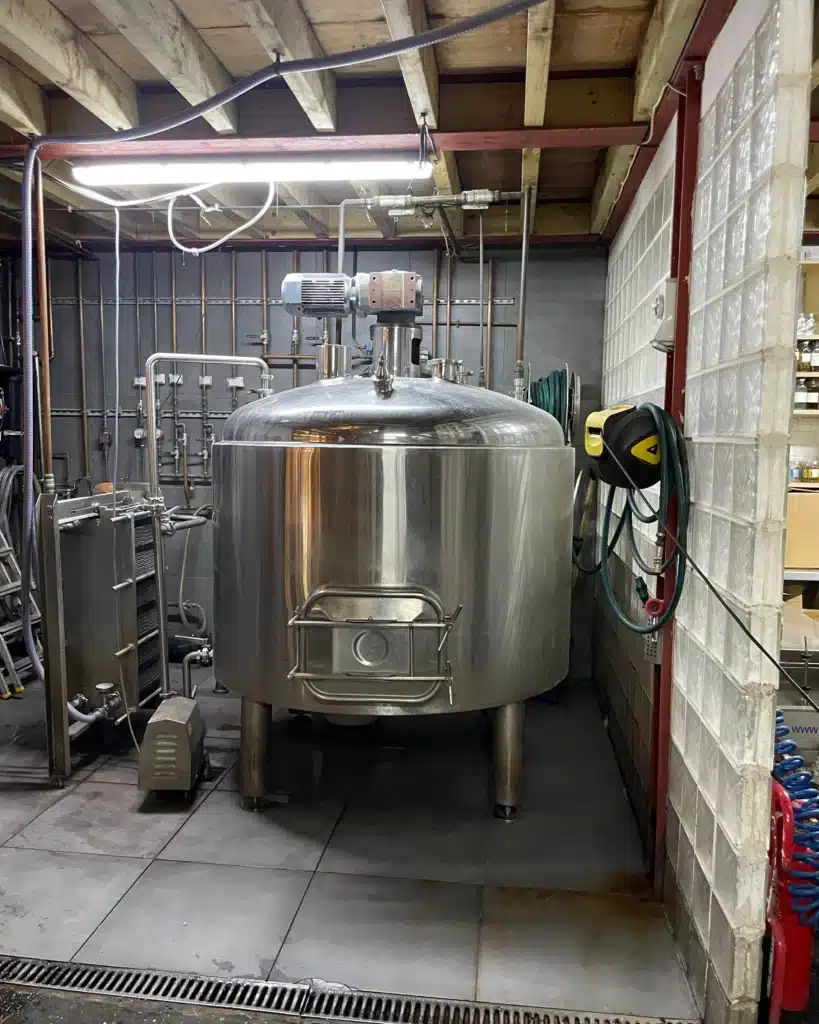
The first change is the mashing area. The same 1 tonne mash vessel now stands ceremoniously in a dedicated mashing area with all the requisite piping, machinery and even a new, more suitable floor (with in-built drainage). Whilst this may not seem like much, it certainly makes life easier (and safer) for the team operating the kit and is a step towards a more distillery-like space.
Fermentation
After mashing their un-milled (merely cracked) malted barley from Warminster Maltings (where they have a dedicated malting floor) the wort is transferred into 7 American oak washbacks (fermentation tanks). Unlike steel, the lightly-charred oak vessels allow the formation of natural bacteria which adds to the fermentation after the added yeast has done its job, generating malolactic fermentation and the creation of these fruity esters that give Bimber new-make it’s distinct flavour. The fermentation lasts 168 hours and with one washback for each day of the week, nothing gets rushed here in pursuit of extra flavour compounds.
Still Cooking
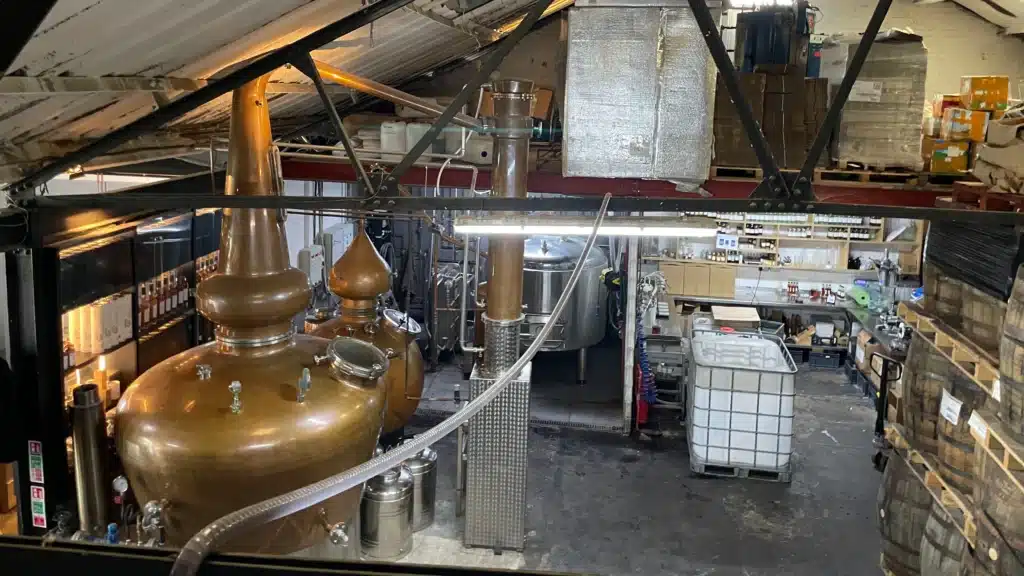
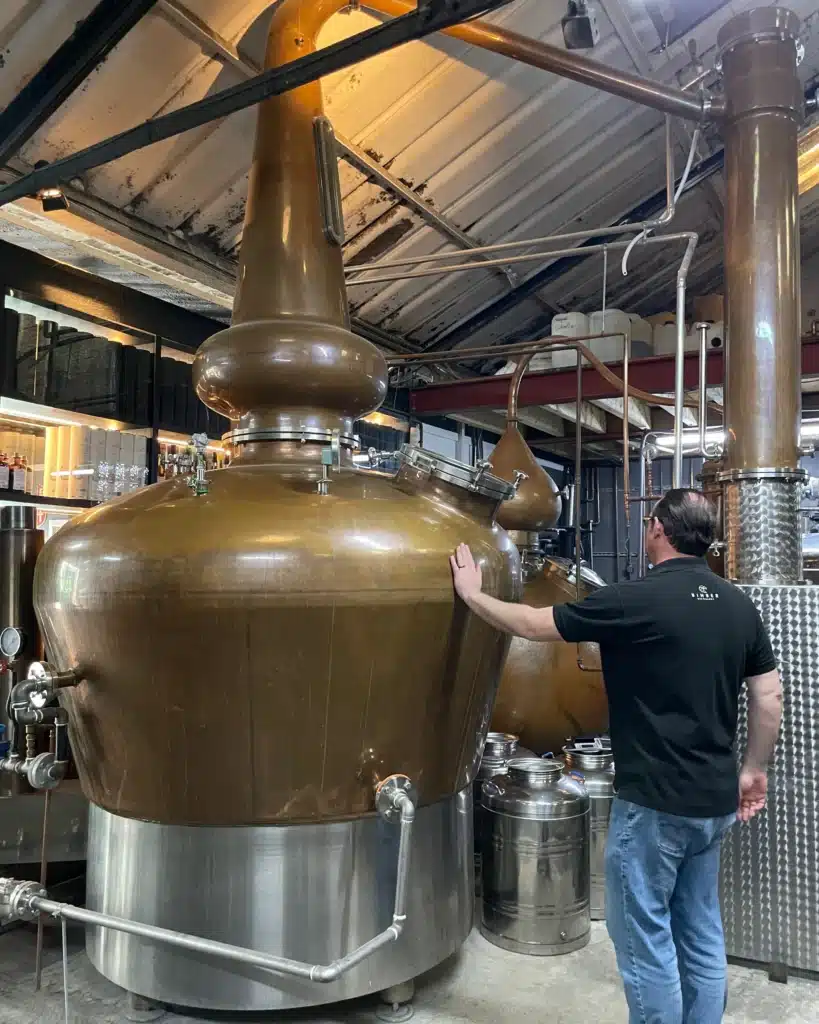
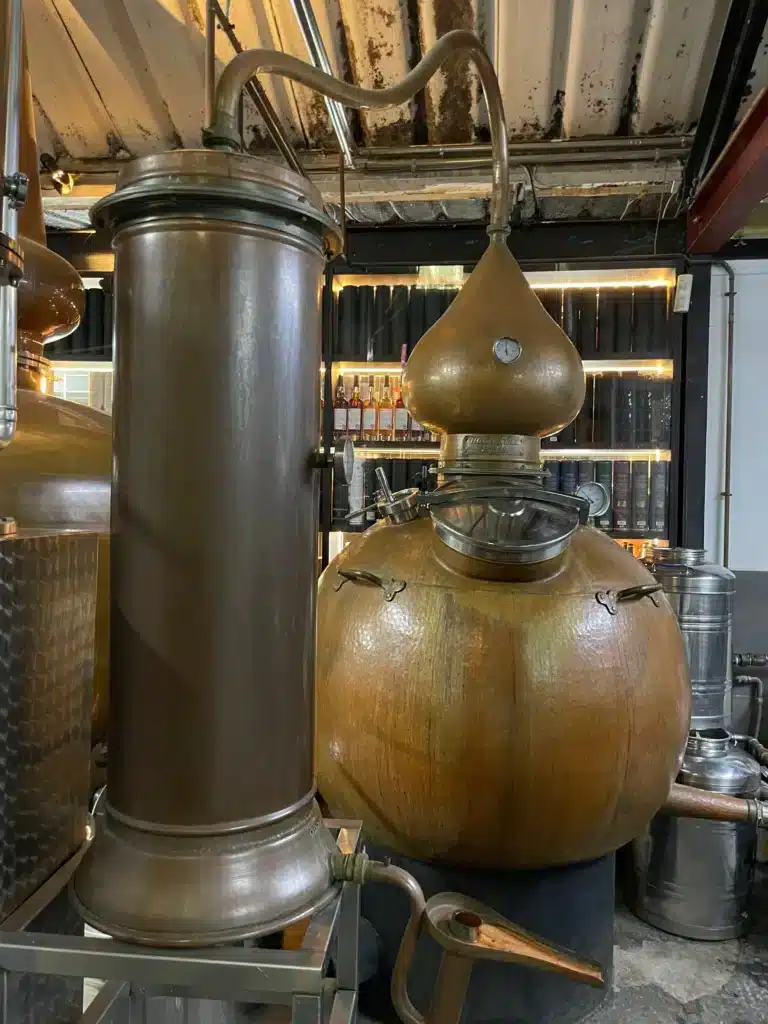
As yet deployed in production, the biggest and most obvious change at the distillery is the new 2000 litre wash still. Unlike the previous (and existing spirit still) which were both 1000 litre alembic stills, this is a traditional style copper still. Direct-fired as before (though now hidden from view for health & safety reasons), the direct flames create additional flavour compounds and an oily mouthfeel to the liquid in a process known as the Maillaird effect, something many whisky-geeks go mad for.
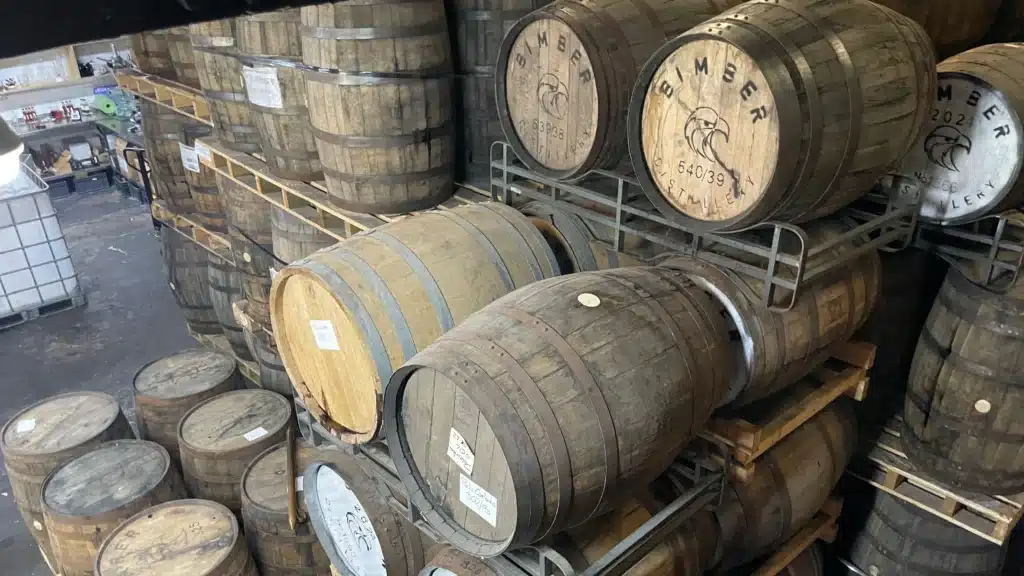
Once the clear spirit (often referred to as “new make”) trickles out of the spirit still the liquid is filled into casks. Where Bimber differ from some distilleries is they only use the highest quality genuine casks. From whole Ex-bourbon casks direct from the US and divine sherry casks which previously held actual Sherry* from some of the best Bodega’s in Europe.
The demand for Bimber is, in part, due to the scarcity of the product – although releases are getting bigger and some releases are available for longer than the 10 minute launch window. However, this is still a highly desirable dram and certain bottles (such as those in the “Spirit of the Underground” range) often appear on auction sites straight after they’ve sold out with a healthy secondary market making some buyers significant profit (much to the distillery’s annoyance).
Sampling Success
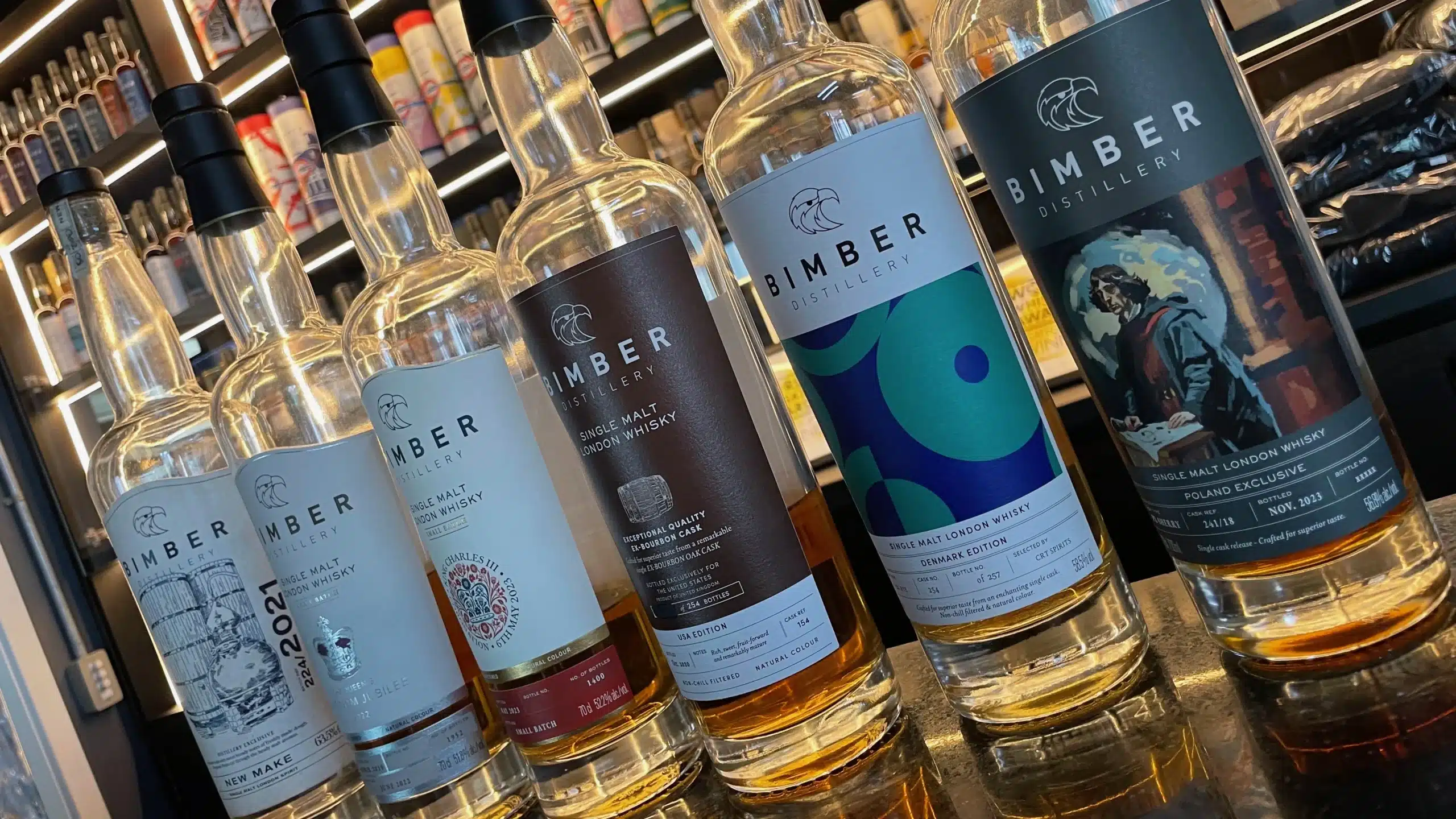
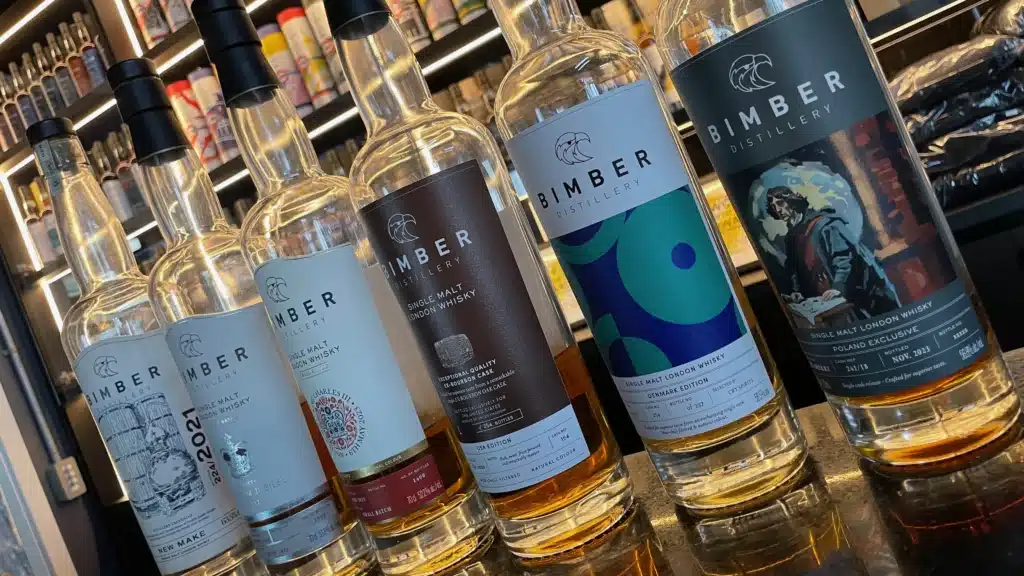
My visit ended (as all good days should!) with a tasting of some old & new samples from this esteemed distillery. Needless to say everything I tried was delicious, but my particular favourite was a single-cask edition for the US market (bottled in October 2020, on of just 254 bottles at 59.1%). The King Charles III coronation bottle was also very lovely and a great piece of royal memorabilia (if you can resist drinking it of course).
All-in-all a wonderful day out at one of the leading English Distilleries doing amazing things from such an inconspicuous location. Proof, if any were needed, that it’s not what’s on the outside that matters, but what’s on the inside – especially when that’s the inside of a bottle. I’m once again in awe of this fantastic distillery, team and whisky. If you haven’t tried it, get your hands on a bottle or a dram at your local whisky bar and see for yourself how Bimber really are changing the way we think about whisky production.
We’ll drink to that.
Cheers!
*Most sherry casks used for whisky maturation have been ‘seasoned’ with sherry which is then either converted to vinegar or sadly, disposed of – the value being in the wood, rather than the fortified wine.
STATS
Founded: 2015
Wash Still (as of 2024): 2000L
Spirit Still: 1000L Alembic
LPA: 100,000 (2024 onwards, previously 50,000)