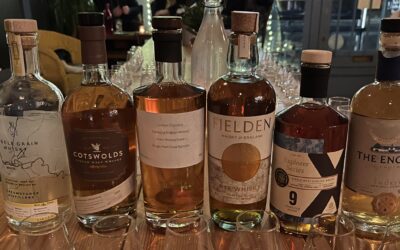

What is English Whisky?
UPDATED: 10/06/2026
With over 70 English distilleries laying down whisky to date, we thought it high time we gave you our thoughts on what, exactly, is English Whisky.
The first thing to know about this category is that it doesn’t currently have any English-specific regulations. The only rules that currently apply are EU whisky laws – specifically; distillation of grain / cereal based mash, fermentation by the addition of yeast, one or more distillations at less than 94.8% alcohol, maturation in wooden casks for at least 3 years and no additives except caramel colouring can be used & alcohol content of final product over 40%.
This may seem like a lot of rules, but compared to Scotch produced north of the border, this is like a post-it note compared to a 3-part trilogy. These rules (or lack-of) are in part responsible for the wide variety of styles of whisky produced in England, from single malts (some indistinguishable from Scotch, others less so), to rye, corn and many mash bills in between – even before production processes & casks are taken into account.
SO, CAN A CATEGORY WITH SUCH VARIETY & DIFFERENCE ACTUALLY BE DEFINED?
In our view, what binds many English distilleries together is a determination to create quality, flavoursome products using craft production techniques and high-quality ingredients. Some may pursue higher purposes such as sustainable methods, organic certification or the revival of heritage grains, but the core principles across most English distilleries are a shared ambition to put England on the world whisky map with consistently great products that win awards, turn heads and build loyal followings.
So ,what, specifically, are distilleries doing to achieve these goals? Whilst not every element is true for every distillery, we’ve complied a list of processes that, combined, go some way to defining the ambitions of the category:
- High quality ingredients. Where possible, locally grown grains, floor malted & mashed gently to release more flavour
- Long fermentations, often with unique yeast strains (or allowing wild yeast to be present) to again create additional flavours pre-distillation
- Bespoke / craft stills that allow for unique interaction with copper & carefully managed cut points & smaller cuts
- High quality casks, either direct from distilleries or via cooperages such as Jensens (England), Speyside (Scotland) or Kelvin (USA) – often ex-bourbon & Sherry, but also use of STR (shaved, toasted & re-charred ex wine casks) as created by the late, great Dr. Jim Swan to deliver flavour faster in young whiskies
- Higher ABVs than standard supermarket products to deliver greater flavour and appeal to the discerning whisky drinker used to higher ABV products from independent bottlers and other craft distilleries globally (though some are exploring filling casks at lower ABVs for subtler flavour extraction without removing heavier, harsher compounds from the wood).


Ultimately though, that makes English whisky “English whisky” is a spirit, passion and collaboration of a young industry trying to make its mark on the world stage. With age against them (even compared to many “World Whisky” scenes) English Whisky is using all the tools available to it in this endeavour.
Branding, marketing & purpose are crucial to the success of any product and great examples of this can be seen: from the forward-facing Polish eagle of Bimber, to the bespoke bottles of White Peak (Wireworks Whisky), The Lakes and Spirit of Yorkshire (Filey Bay Whisky). We have sustainable distilleries such as Cooper King & Eller’s Farm (Three Ridings Whisky), and Farm-to-bottle distilleries such as The Oxford Artisan Distillery (working with a wide variety of ancient grains on their own farm to secure a future for these lesser-used – and lower-yielding – varieties) and Witchmark.
No two English distilleries are the same, and maybe that is what stands this scene apart from others. There is no one approach, production method or end product that ties these products together, they are, in essence, a representation of their own locality and the ambitions of their founders & distillers to create one county’s first & best whisky. We might be better categorising Yorkshire Whisky to Kent Whisky in years to come as the number of distilleries in these areas reaches micro-category proportions, but even within these regions, variation occurs.
So we’ve helpfully failed to answer our own question, but that’s the exciting thing about exploring English Whisky. No two drams, distilleries of experiences are going to be the same – and that – in itself – is the most exciting and important piece of the jigsaw.
With 71 English whisky producers now on “the map” there’s no excuse not to visit your local distillery and find out what they’re bringing to the innovative, exciting and ultimately delicious table!
Alternatively, become a member today and let us turbo-charge your English Whisky adventure with tastings, cask shares & bespoke offers and products from our growing stable of partners.